





Privacy 101
How to Keep Your Home Address Private on Shipping Labels
August 31, 2026
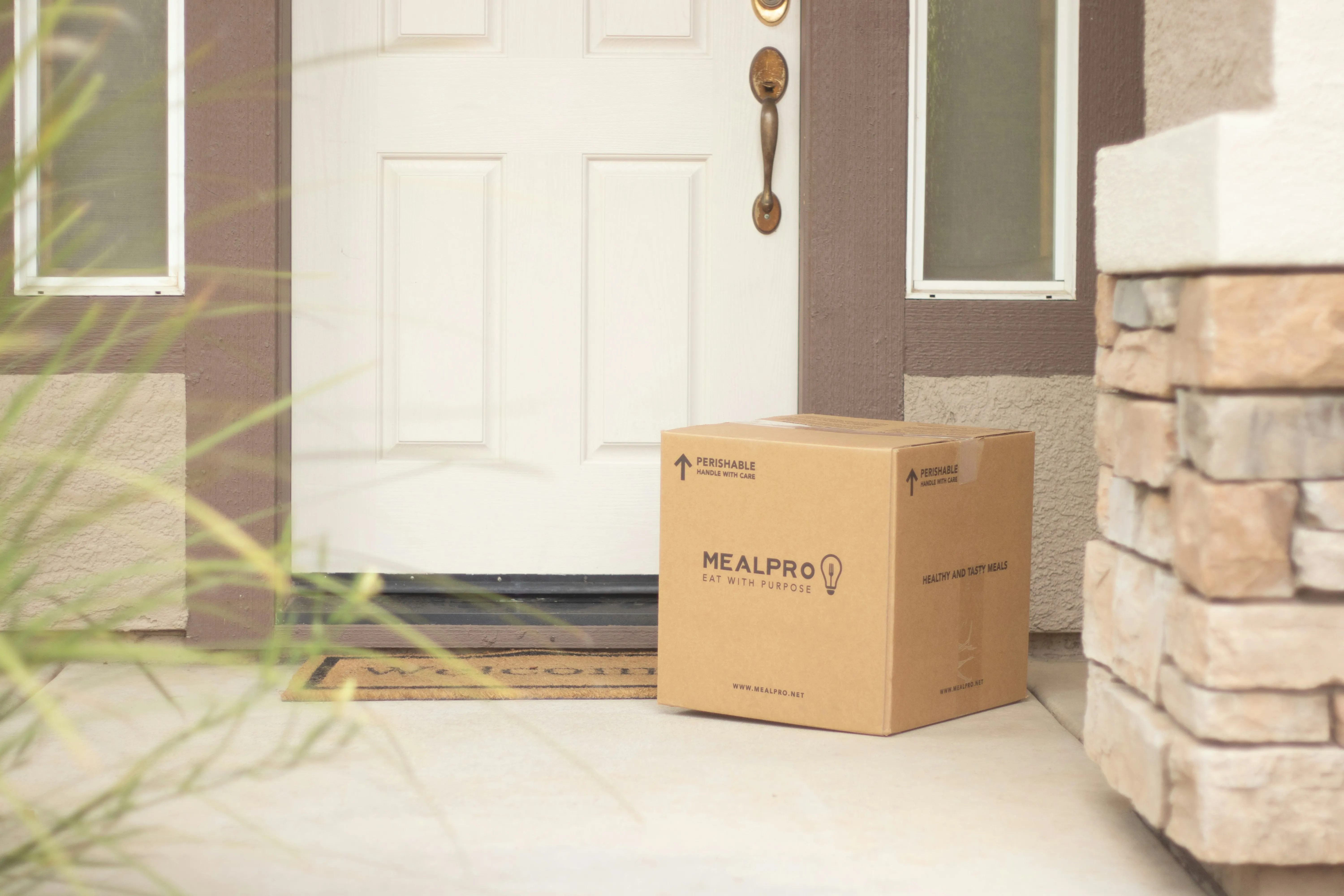
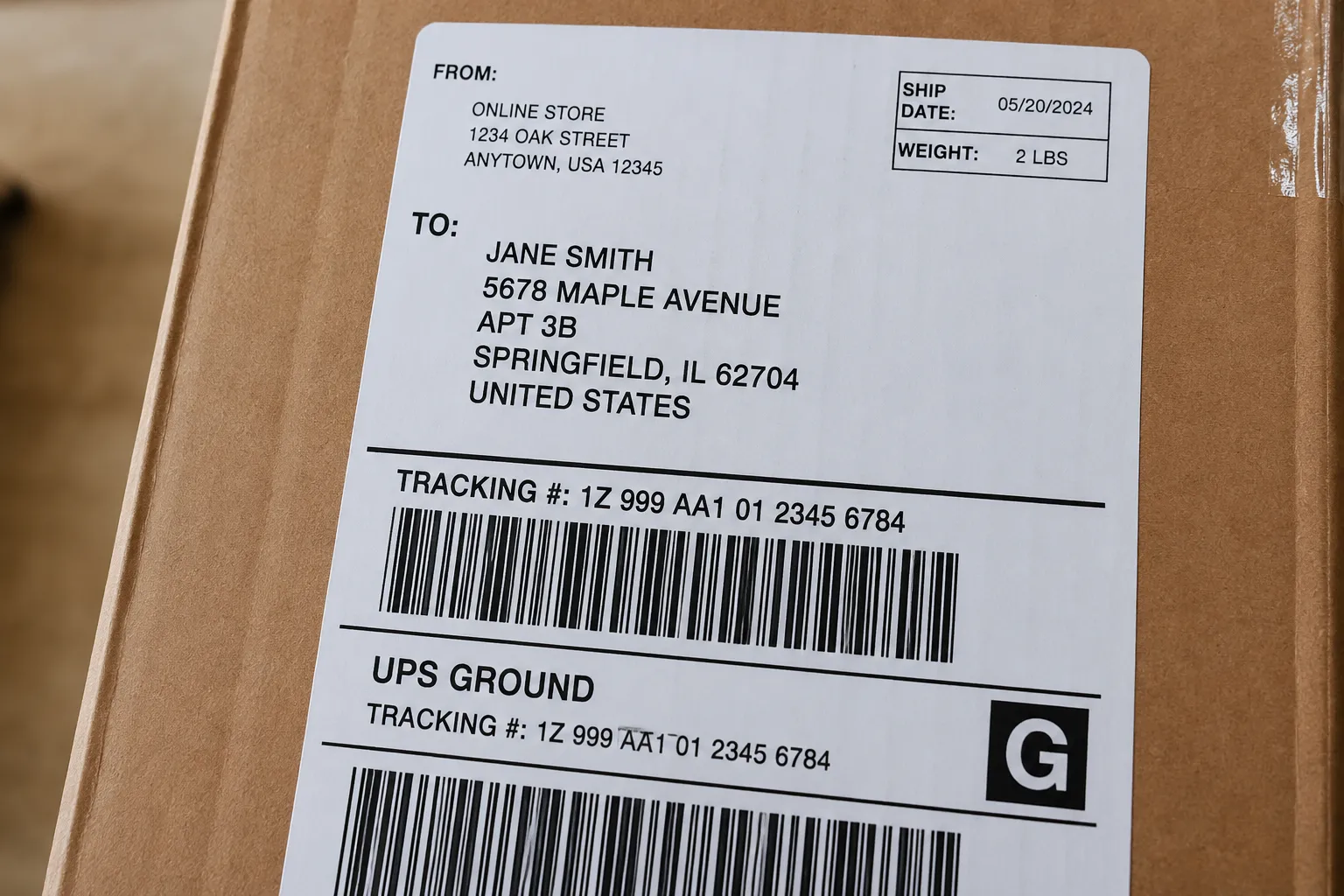
Look at the next box that lands on your porch. Your name is right there. So is your address. Anyone walking past can read it. The delivery app already has a photo of it. And when that box hits the recycling bin next week, the label is still on it, still readable, just sitting at the curb instead of the porch.
Nobody thinks about this in the moment. But that label travels a lot further than one delivery.
How to keep your address off a shipping label
You cannot skip putting an address on a package. Carriers need it to deliver the thing. But you can control who actually sees that address, and where. Route deliveries through a PO Box or parcel locker. Use the label a marketplace gives you instead of writing your own address on resale and return boxes. Strip the label before the box goes out for recycling. Three habits, three different leak points closed.
Where your address actually shows up
A label isn't a one-time event. It resurfaces at several points, and each one deserves its own look.
Inbound delivery. The box shows up, label facing out, readable by anyone on the porch, in the hallway, or on the sidewalk. Some carriers also offer photo proof of delivery on eligible shipments. FedEx's Picture Proof of Delivery is available for most residential FedEx Express and FedEx Ground shipments released without a signature, and UPS provides comparable delivery photos through UPS My Choice for many residential deliveries. Neither is guaranteed on every shipment, and the photo is meant to document where the package was placed, not to capture the label, so whether the label ends up legible in any given photo varies. When it does, that image becomes part of the carrier's delivery record tied to your address.
Package lockers. Shared lockers cut down on porch exposure. Where a carrier does take a delivery photo before placing a package in a locker, that photo can sometimes show the label as well, but this isn't documented as standard practice, it depends on the carrier and the specific locker setup, so treat it as a possibility rather than a given.
Returns. Printing your own label often means your return address gets baked in automatically. Writing it by hand on the original box does the same thing manually.
Resale. Sell something online, and the buyer needs a package. However you print that label determines whether your home address ends up on the box they open.
Disposal. The box gets broken down, set at the curb, label still attached, still legible.
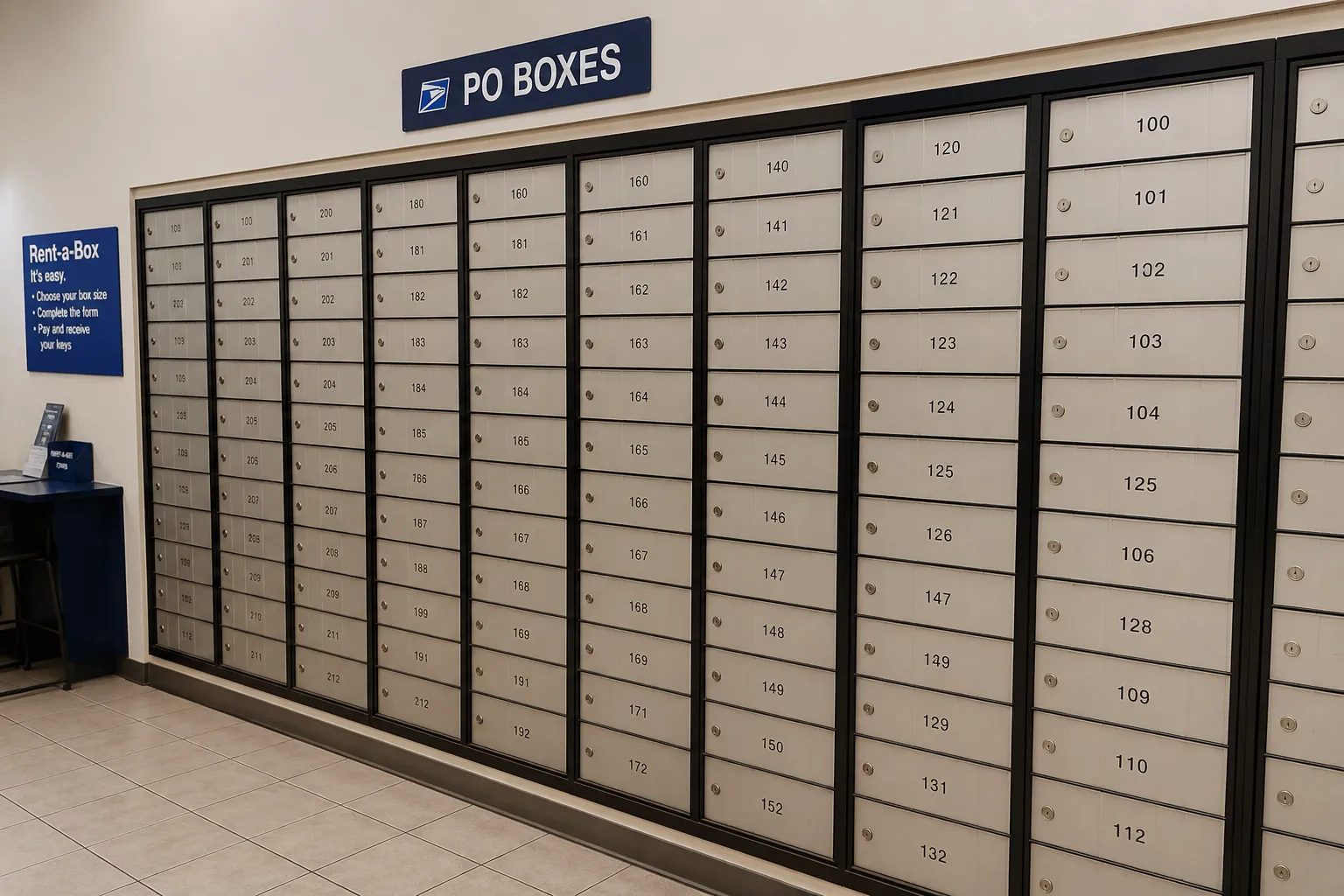
PO Boxes, general delivery, parcel lockers, and private mailboxes
Want deliveries to stop listing your home address? A few options exist, but they solve different problems, and they are not interchangeable.
A PO Box through USPS gets you a separate, reusable address for letters and most packages, in a range of sizes and with 3-, 6-, or 12-month rental terms. Pricing varies by box size and location. Packages too large for the box are held at the counter or in a secure parcel locker for pickup, and some locations offer "Street Addressing," which lets other carriers such as UPS, FedEx, or DHL deliver to the box too, though that's subject to availability.
USPS General Delivery is a different thing entirely, and it isn't really built as an ongoing address-masking option. It's intended mainly as a temporary way for someone without a permanent mailing address, travelers, people between homes, to pick up mail at a specific participating post office, generally held for up to 30 days before it's returned to sender. It's not a reusable address you can hand out to retailers going forward, and it depends heavily on that office's own hours and rules; a postmaster can also restrict it for someone who can't show suitable ID.
Carrier pickup locations, such as a UPS Access Point or a FedEx Hold at Location, let you have one specific shipment held for pickup instead of delivered to your door. This is useful for a one-off package, but it does not, on its own, give you a reusable shipping address you can hand out to retailers or buyers going forward, you're redirecting an individual shipment that's already addressed to you, not establishing a standing address.
Parcel locker services and private mailbox services, offered by UPS Stores, FedEx Office locations, or independent shipping companies, are the options that actually function like a PO Box alternative. These typically provide a real street address at that location, which you can use repeatedly, rather than a single pickup arrangement. This can matter if a retailer or carrier does not accept PO Box addresses for a shipment.
Worth knowing: none of these hide who you are. Whoever runs the box, locker, or mailbox service can still connect it to you, and some services still want a residential address on file separately. What you actually get is distance between your home address and the label a stranger or a delivery photo might reveal.
Virtual mailboxes and package forwarding
One tier up from a PO Box: a virtual mailbox or forwarding service. You get a business-style address to shop and ship with. The provider receives everything on your behalf, then forwards it, holds it for pickup, or in some cases scans it so you can see what showed up before deciding what to do next.
Who's this actually for? Resellers running a shop out of their home. Remote workers bouncing between locations. Anyone mid-move who doesn't want packages chasing an old address. If you order a package every couple of months, this is more setup and cost than the problem deserves.
A checklist for returns and resale
Returns and resale are the two exposure points people overlook most. A few habits close both gaps.
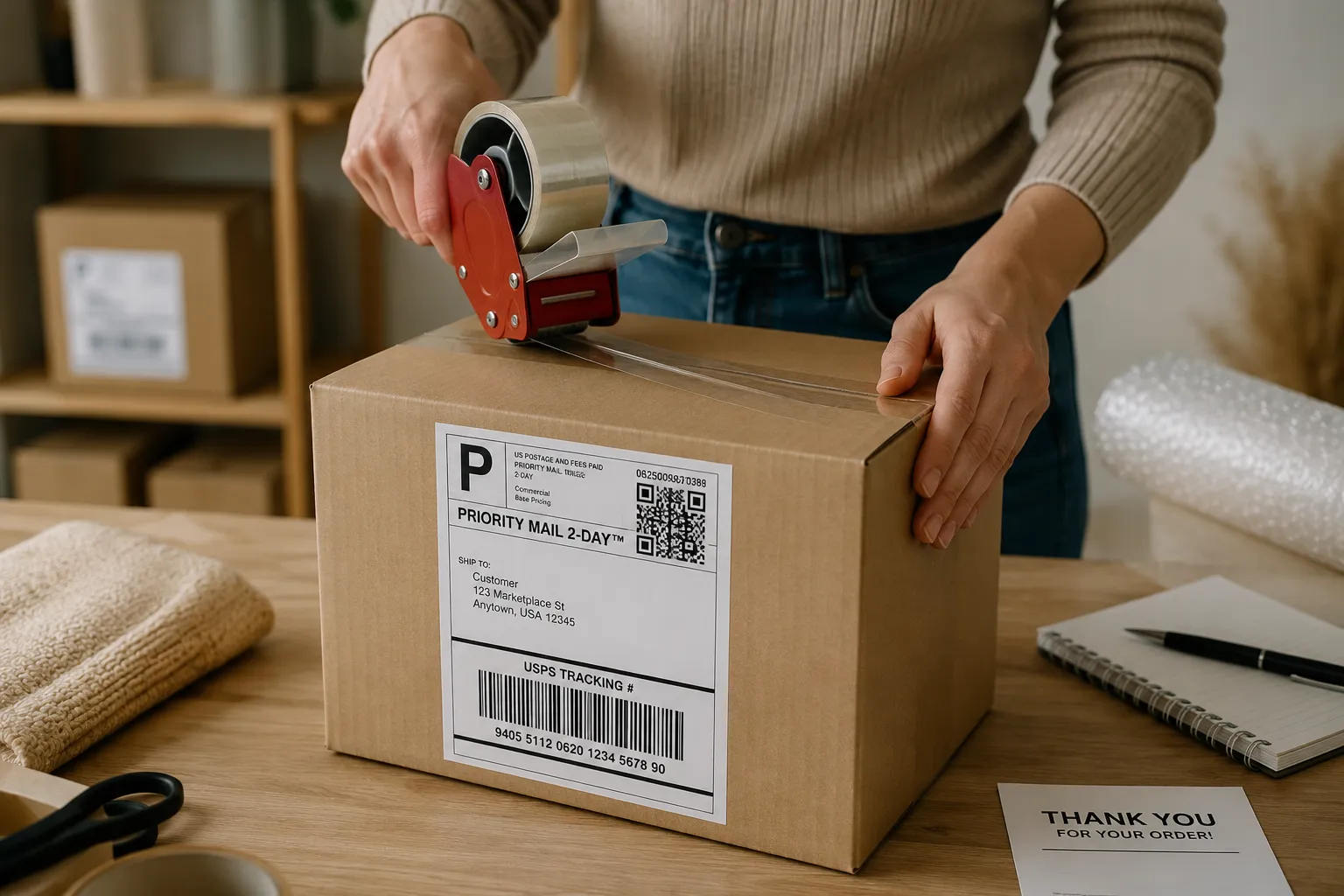
Use the marketplace's prepaid label or QR code instead of hand-writing your address on the box. This is safer than writing your own address by hand, but it doesn't automatically hide your return address, some labels list a warehouse or facility address, while others still print your personal return address by default.
Before you ship anything, look at the completed label. Don't assume it's masked just because you didn't type it yourself; confirm what's actually printed before it goes out.
If the platform offers an option to hide or mask your address from the buyer, use it. Some route shipping through their own partner so neither side sees the other's full address.
For returns, use the retailer's provided label instead of writing your return address on the original box.
Where a platform lets you choose or edit the return address on a label, use a PO Box or private mailbox address instead of your home address.
What happens to the box after
The label doesn't stop being a problem just because the delivery already happened.
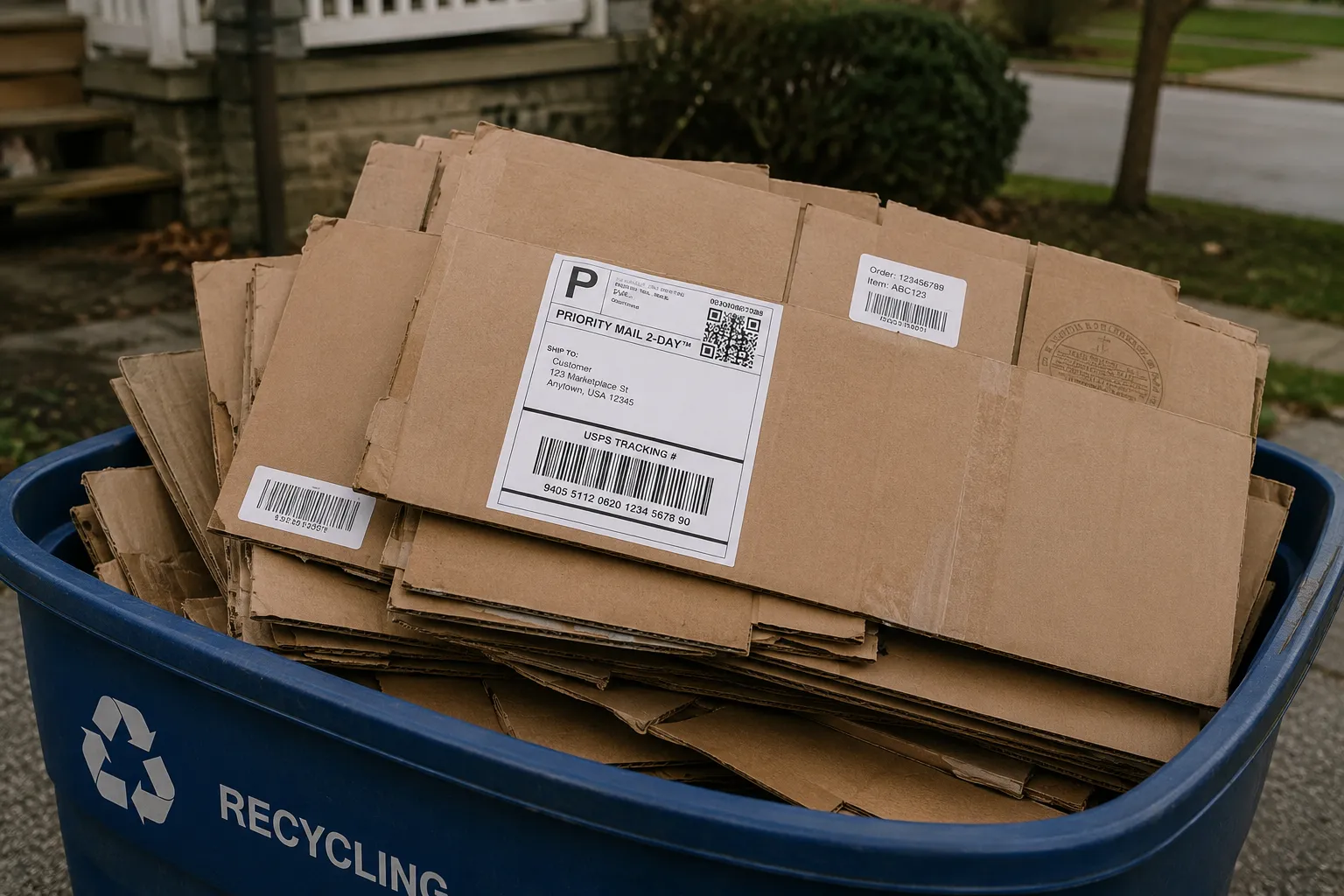
Before the box hits recycling: tear off the label, black it out, or cut that section out entirely. Flattening the box doesn't remove the label. It just makes it easier to read from further away.
This isn't paranoia. Package theft is a documented, common problem, not a rare edge case. According to the Better Business Bureau, porch pirates often target the same neighborhood repeatedly, favoring homes with easy access and good visibility close to the street. A visible label doesn't have to say much to be worth hiding, a name and an address is already more than most people mean to leave in plain sight. A label at the curb hands over that same information a label on the porch does. It's just a few days later, and to anyone walking by rather than the delivery driver.
What this does not fix
Here's the limit. A PO Box, marketplace labels, and careful disposal cut down how many strangers, neighbors, or passersby can read your address off a box going forward. None of it erases exposure that already exists. Depending on the retailer or carrier involved, an address tied to a purchase or delivery can be retained, matched against other records, or in some cases shared with third parties, and some of that data eventually surfaces in Data Broker or People Search Site listings. Not every company does this, and using a shipping label once does not guarantee your address ends up on a public listing. But the general pathway exists, and it runs independently of anything you do with your next shipping label.
The same basic pattern shows up with phone numbers too, covered in more depth in why stores ask for your phone number at checkout. Once an address is tied to enough purchases or deliveries, it can potentially be matched, retained, and shared onward, well past the shipping label that started it.
Curious where you actually stand? The only way to know is to look. Search your own name and address on a People Search Site or two and see what comes up. It's usually more than people expect, and it rarely traces back to any single box on the porch.
Pick your approach
Order online now and then? Shred or black out labels before recycling, and use marketplace labels for the occasional return or sale. That handles most of it.
Selling regularly? A PO Box or parcel locker service earns its cost, paired with marketplace labels every time.
Trying to keep your address private for safety, a move, or your own reasons? A virtual mailbox or forwarding service gives you the most distance between your real address and anything printed on a box.
Where to go from here
Shipping labels are one small, physical slice of a much bigger picture. Fixing how you handle them closes off the exposure you control today. It does nothing about whatever's already sitting in a Data Broker's files from years of past deliveries, old addresses, or public records.
Privacy Bee's free scan checks Data Broker and People Search Site listings for your personal information and shows you what it finds. Actually submitting and managing removal requests on an ongoing basis requires one of its paid plans, the free scan tells you what's exposed, and clearing it is a separate step depending on which plan you choose. It won't clear every trace of your address off the internet, and it's not a substitute for the habits above. What it gives you is an ongoing way to actually see what's out there under your name and address, instead of guessing.
The bottom line
A label does its job for one delivery, then keeps sitting there, readable, long after that job is finished. Reroute where packages land. Use the labels a marketplace already hands you. Tear off old labels before they hit the curb. That closes most of the everyday gap. What's already out there from years of past deliveries is a separate question, and one worth a quick look on its own.