





Privacy 101
Why stores ask for your phone number at checkout (and when to say no)
August 27, 2026
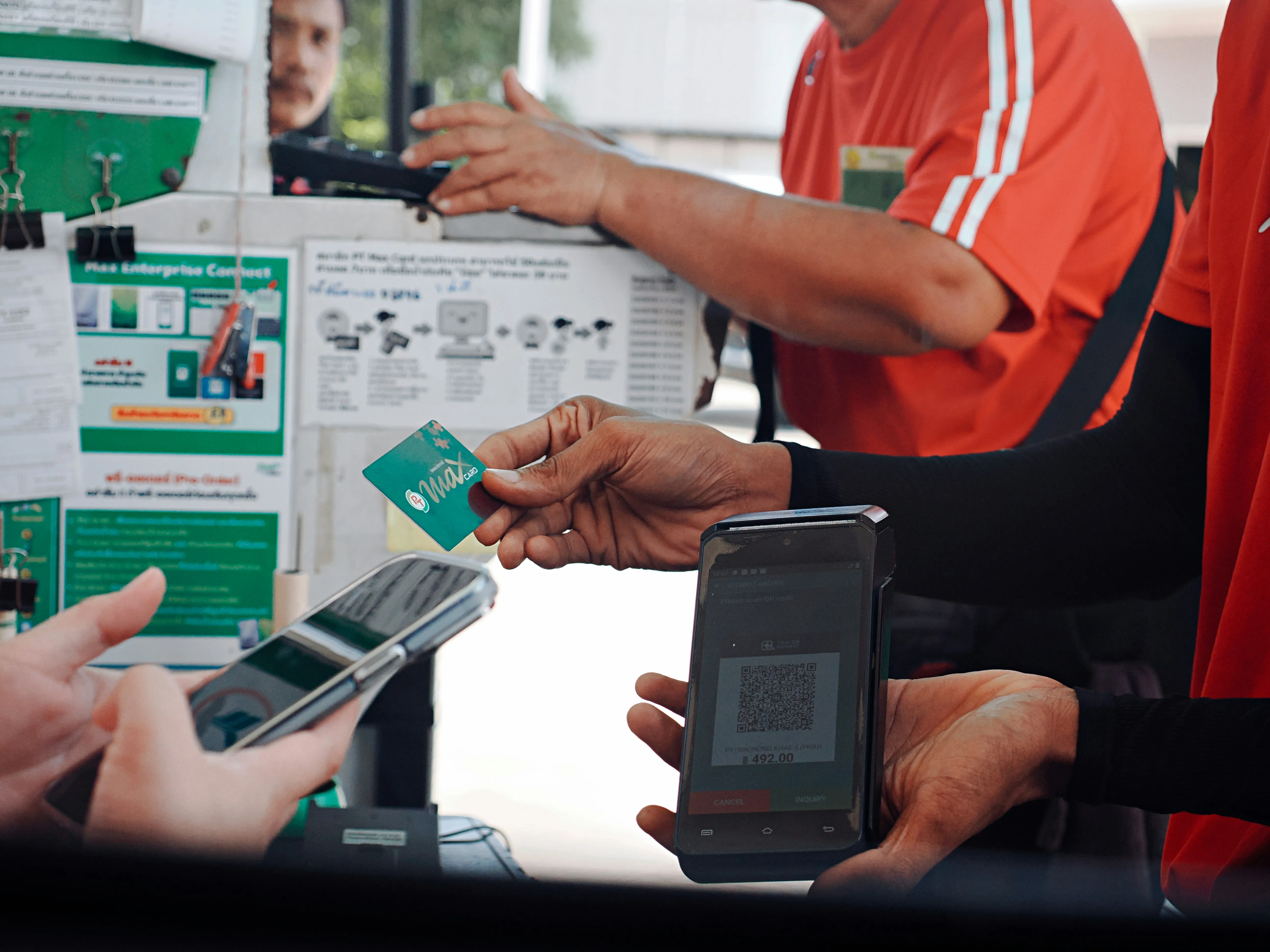
You are paying for something simple. A phone case. A pack of batteries. A coffee maker. Right as the sale wraps up, you hear it: "Can I get a phone number for you?"
It is a small moment, but it makes you pause. Why does this purchase need your phone number? Are they going to text you? Sell it? Is it even required, or can you just say no and move on?
That hesitation makes sense. You are being asked to hand over a personal identifier for a purchase that, on the surface, does not need one. Here is what is actually going on, and what your options are.
Why do stores ask for your phone number at checkout?
There is rarely just one reason. Stores ask for your number to send a digital receipt, to sign you up for a loyalty program, to check high value or financed purchases for fraud, and, less openly, to link your purchases into a profile they can use for marketing later. Some of these help you. Others mainly help the store.
The legitimate reasons behind the question
Not every request is a data grab. Several of these reasons solve a real problem at the register.
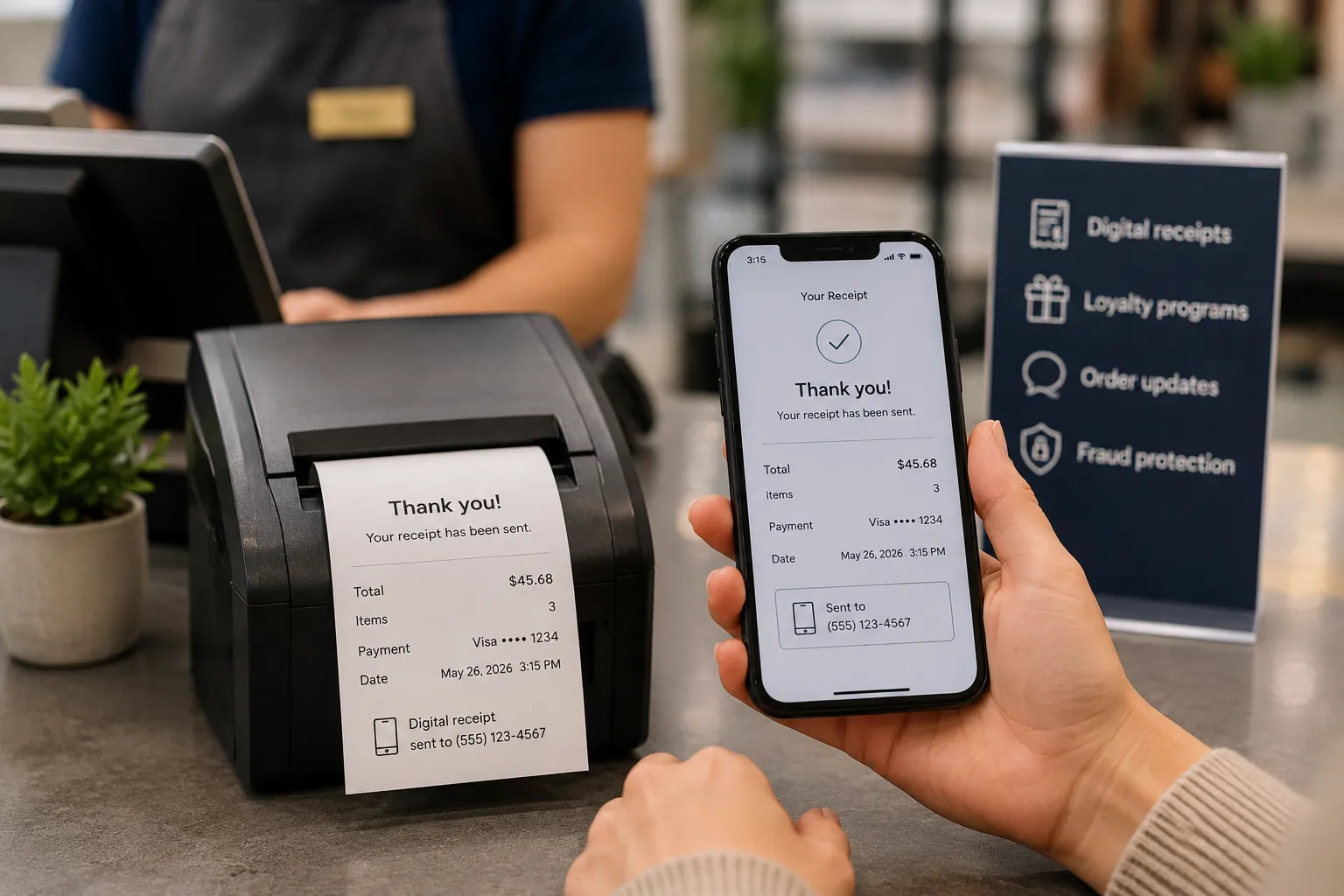
Digital receipts. Many stores have moved away from printing receipts by default. Your number, or your email, is just a way to send you a copy you can actually find later instead of a strip of paper that fades in a drawer.
Warranty registration. For electronics and appliances, your number can get linked to the product so the manufacturer can reach you if there is a recall or a defect.
Order pickup. For online orders or in-store pickup, a phone number is often how a store confirms your identity or lets you know your order is ready.
Fraud checks on big purchases. For furniture, electronics, or anything financed over time, a phone number is one more way to confirm you are who you say you are.
In each of these cases, the number is working like part of the transaction itself. Whether it also ends up on a marketing list depends on the retailer's own privacy policy.
The other reason: turning your number into an identity thread
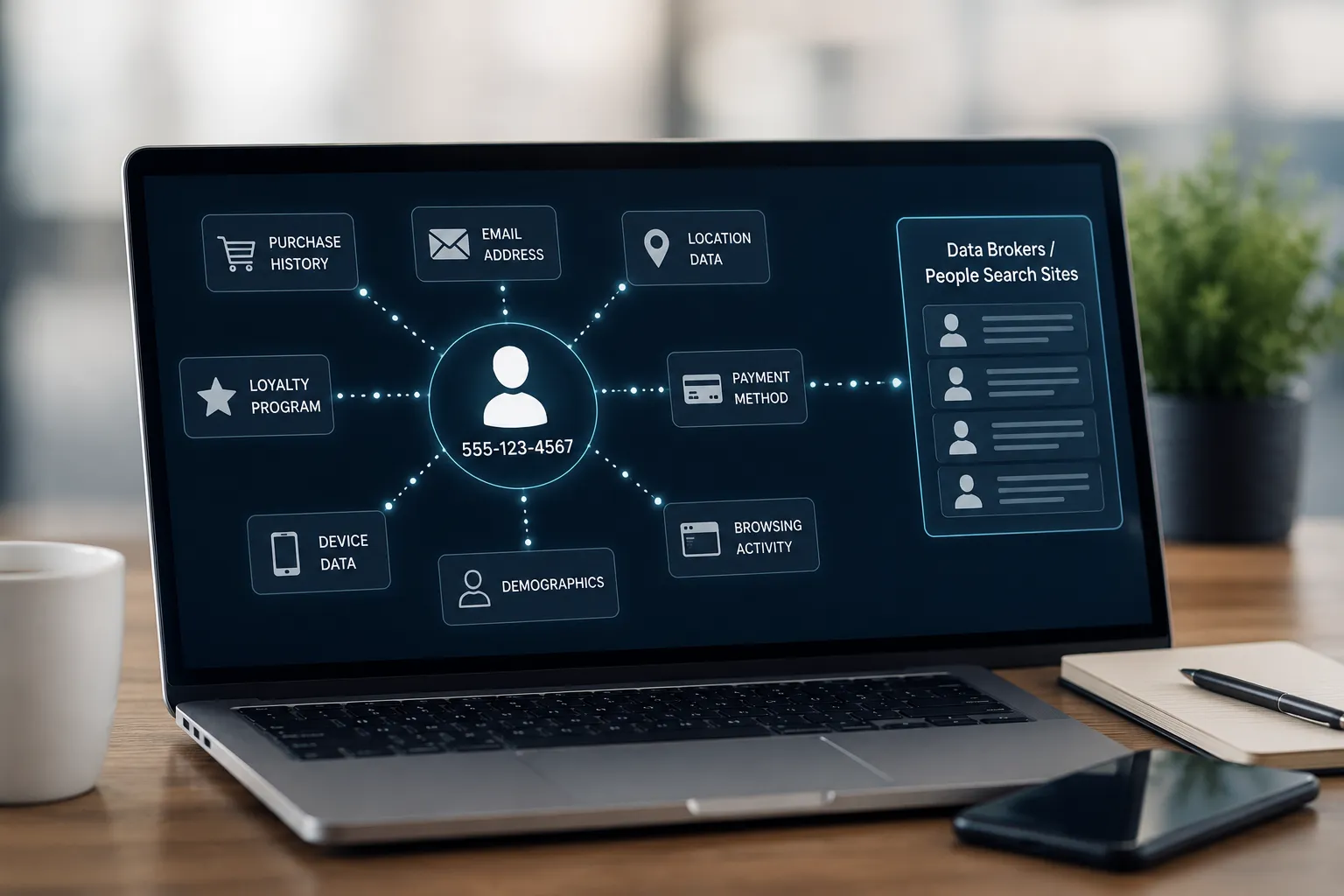
Here is the part that does not get said out loud at the register. A phone number functions as a persistent identifier, meaning businesses can use it to match records across systems and over time, even though the number itself can change or be reassigned to someone else. That makes it a useful way for a store to link together purchases you have made there, whether you signed up for anything or not.
From there, some retailers go further. Through a process called identity matching, your number can be compared against other records, like email addresses, loyalty accounts, or third party marketing lists, to build a fuller picture of you across different systems. The FTC's report on Data Brokers: A Call for Transparency and Accountability documents this pattern in detail, including how everyday details like purchase history and warranty registrations get pulled together and resold.
This is also how a lot of targeted retail marketing works. Abandoned cart texts. A coupon that shows up right when you usually restock. A birthday discount. None of this is unusual on its own. But it does mean a number given "just for the receipt" can end up doing more than that framing suggests.
It also raises a fair question. If your number has quietly linked your purchases together for years, what does that add up to from the outside? It is worth finding out. Searching your own number is a reasonable way to see what is actually out there.
When is it required, and when is it optional?
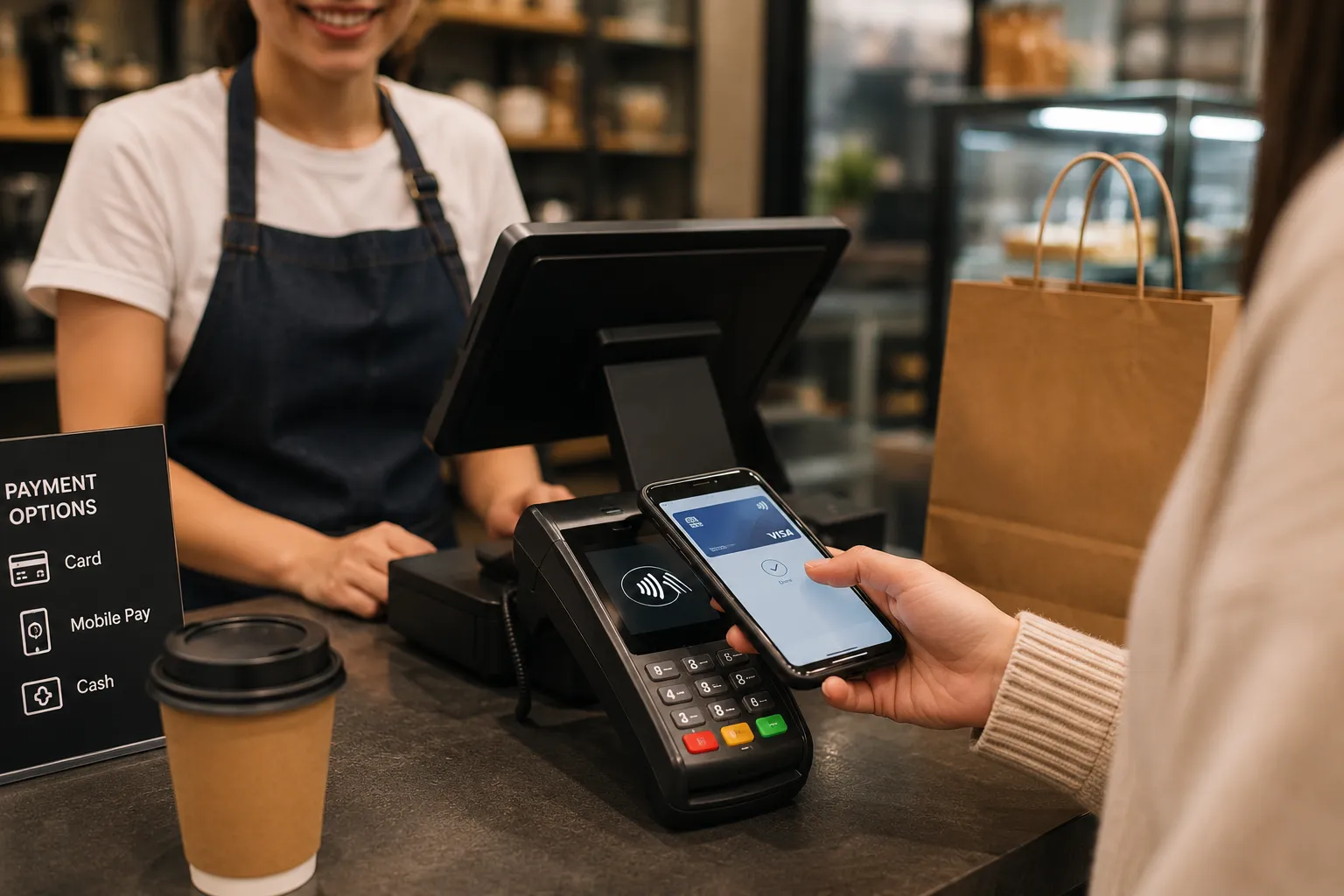
This is what most people actually want to know. Phone number requirements vary by retailer, lender, transaction, and applicable law, so treat the following as general patterns rather than a fixed rule.
Situations where a retailer may require it:
Online orders shipped to your home, since you need delivery updates
Financed or installment purchases, for identity verification
Refund or return tracking when you do not have a receipt
Store pickup orders, so the store can confirm it is you
Usually optional:
In-store checkout, "for the receipt"
Loyalty or rewards program sign-up
A general "can I get a number for you?" at the register
Warranty registration at the time of purchase, which you can often do later online instead
The pattern is simple. If the number is needed to actually complete or fulfill the purchase, it is likely required. If it is about a loyalty program, marketing, or convenience, it is optional, even if the script makes it sound routine.
How to decline without the awkwardness
You usually have more room to say no than the checkout flow suggests.
Just say no. "No thanks" or "I will skip that" is enough. Cashiers hear this often. It will not hold up your purchase.
Ask if it is actually required. For a financed item or an online order, ask directly. "Is that required for this order, or can I skip it?"
Use a second number. Some people keep a separate number, like a Google Voice number, just for retail sign-ups like this.
Watch for pre-checked boxes. Online checkout forms sometimes auto-enroll you in texts or emails near the phone number field. Uncheck the box before you submit.
Skip the loyalty program if you do not want it. Ask if there is a generic loyalty card or app that does not require your personal number.
Opt out later if you already gave your number. Most stores let you reply STOP to texts or unsubscribe from emails. That revokes covered promotional messages from that sender going forward, though it does not delete your number from the retailer's records, and it does not necessarily stop transactional messages like order or shipping updates.
None of this guarantees you will never get another marketing text. Spam and scam texts often have separate causes, which we cover in our piece on whether removing your data reduces spam calls. But being selective about who gets your number in the first place does cut down on how often it gets passed along.
Your number rarely stays with just one store
Here is the part worth sitting with. A number you hand over at one register does not necessarily stay with that one store. Depending on the retailer's practices, a number can be retained, matched against other records, or shared with third parties, and in some cases that data eventually flows into Data Brokers or People Search Sites. Not every retailer resells phone numbers, and a single checkout request does not, by itself, mean your number will end up on a People Search Site. But the general pathway exists, and it is not always visible to the person who gave the number in the first place.
Over time, and across enough transactions, this is one way a number given "just for a receipt" can end up connected to a broader profile, sometimes on a site that has nothing to do with the batteries you bought. It rarely happens all at once. When it does happen, it tends to build up gradually, across many small data points rather than one single event.
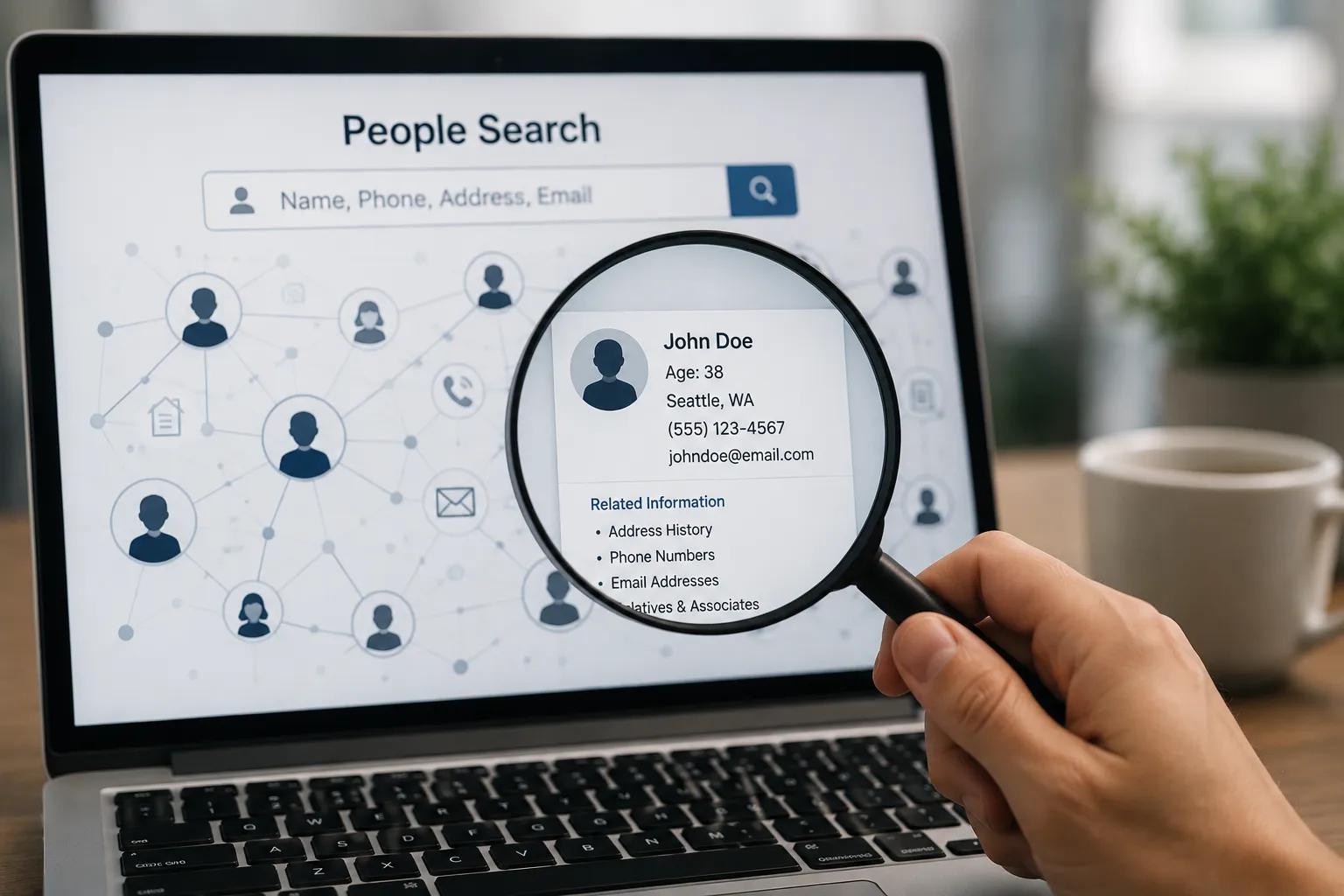
That naturally raises a question. What does that picture look like for your number right now? The only way to know is to look. A quick search on a People Search Site or two often turns up more than expected: old addresses, relatives' names, or past employers, all quietly pieced together from years of moments like the one at the register.
What to do next
Once you see how far one checkout field can travel, from a receipt request to a lasting identifier to a line on a People Search Site, the next step is not more caution at the register. It is checking where your number has already ended up.
Privacy Bee monitors for your personal information across Data Brokers and People Search Sites and helps you request its removal on an ongoing basis. It will not erase every trace of your number from the Internet, and it is not a guarantee against every unwanted call or text. What it does is give you an ongoing, organized way to find out what is out there and act on it, instead of wondering.
Frequently asked questions
Do I have to give my phone number at checkout? For an ordinary in-store purchase, you can usually ask to skip it, since the request is often tied to a loyalty program, marketing list, or digital receipt rather than the sale itself. Whether it is actually required depends on the retailer, the type of transaction, and applicable law, and it tends to matter more for online orders with delivery, financed purchases, or tracking a return without a receipt.
Can I refuse to give my number in a store? Yes. Declining at a standard checkout will not stop your purchase from going through. If a cashier or system insists it is mandatory for a simple in-person purchase, it is worth asking a follow up question rather than assuming that is true.
What happens to my number after I give it at checkout? It depends on the store, but it is commonly stored in a customer or loyalty database, used to send receipts or marketing, and sometimes matched against other records through identity matching. From there, it can be shared with marketing partners or Data Brokers, depending on the store's privacy policy.
The bottom line
That checkout question is not random, but it is not one thing either. Sometimes it is genuinely useful, like a receipt or a delivery update. Other times it is the start of a profile that follows you well past that one purchase. Knowing the difference, and having a few simple responses ready, puts the choice back in your hands instead of defaulting to yes because someone asked first.